
Psychology
Mind
Psychology for Curious Minds
Expanded Edition — Including Bonus Chapter on Practical Tools for Everyday Psychological Insight
Introduction
Psychology is the scientific study of the mind and behaviour. It examines how we perceive the world, learn from experience, form memories, experience emotions, develop personalities, influence one another, and cope with the challenges of life. Understanding these processes does not require a laboratory or a clinical degree. It simply requires curiosity about why people — including ourselves — think, feel, and act as they do.
Most people already notice patterns in their own reactions and in the behaviour of others. What is often missing is a clear framework that connects those observations to reliable findings from decades of careful research. Why does one situation leave you energised while another leaves you drained? Why do some habits form easily while others resist change? Why do we sometimes act against our own better judgment? The answers lie in the basic mechanisms of the mind, not in vague slogans or oversimplified self-help claims.
This guide is written for curious readers who want accurate information without unnecessary complexity. You do not need a background in biology or statistics. You only need the willingness to look at mental life with the same interest you might bring to understanding how the body works or how arguments hold together. Clear psychological knowledge and everyday living are not in conflict. In fact, the more clearly you understand the processes that shape thought, feeling, and action, the easier it becomes to navigate ordinary challenges with greater awareness and fewer avoidable surprises.
We begin with the foundations of the field and the biological systems that make mind and behaviour possible. From there we examine how we take in information through the senses, how experience changes us through learning, how memory stores and retrieves that experience, and how we think and decide. Later chapters turn to motivation and emotion, the relatively stable patterns we call personality, the powerful influence of other people, and the practical topics of stress, mental health, and well-being. A final bonus chapter offers tools and resources that can support ongoing insight.
A few principles guide everything that follows. No single theory or finding explains everything about the mind. Context, individual differences, and the interaction of many factors matter far more than any isolated claim. The mind is adaptable. Patterns of thinking, feeling, and behaving can change with experience, practice, and deliberate effort, though not always easily or quickly. Consistency in applying psychological insight across months and years is more useful than perfection on any single day. Individual needs, histories, and circumstances vary widely. The information here is educational. It is not personal therapy, diagnosis, or medical advice. People experiencing significant distress, those with existing mental-health conditions, or anyone in crisis should seek help from a qualified professional.
The goal is competence rather than self-diagnosis or quick fixes. By the end of this material you should be able to look at common psychological phenomena and understand, in broad terms, what processes are likely at work, and you should feel more confident separating solid findings from popular oversimplifications. Let's begin with the foundations.
Chapter 1
What Psychology Is and Why It Matters
Psychology is the scientific study of mind and behaviour. It seeks to describe, explain, predict, and sometimes influence how people and other animals think, feel, and act. Unlike everyday speculation, psychological science relies on systematic observation, careful measurement, and methods designed to reduce bias and test competing ideas. The field tries to move beyond anecdote and intuition toward findings that can be checked and refined.
The field is broad. It includes the study of the brain and nervous system, the development of children and adults, the processes of learning and memory, the experience of emotion, the structure of personality, the influence of groups, and the nature of psychological distress and well-being. These areas overlap. A single behaviour can be examined at the level of neurons, of personal history, of current social context, and of cultural meaning. No single level is complete on its own.
Major Perspectives
Over time, several broad perspectives have shaped the field. The biological perspective emphasises brain structure, neurochemistry, and genetics. The behavioural perspective focuses on observable actions and the environmental events that shape them. The cognitive perspective examines mental processes such as attention, memory, and problem-solving. The psychodynamic perspective, rooted in earlier clinical work, attends to unconscious processes and early experience. The humanistic perspective highlights personal growth, meaning, and subjective experience. The social and cultural perspectives examine how other people and wider cultural contexts influence the individual.
Modern psychology tends to be integrative. Most researchers and practitioners recognise that multiple levels of analysis are needed. A useful practical stance is to ask which level of explanation is most relevant for the question at hand rather than treating any single perspective as complete. Different questions call for different tools.
Why Psychological Knowledge Matters
We constantly interpret our own behaviour and the behaviour of others. Without some grounding in reliable findings, those interpretations rest mainly on personal experience, cultural assumptions, and the most vivid stories we have heard. Psychological research does not eliminate the need for judgment, but it can correct common errors, highlight mechanisms that are not obvious from everyday observation, and point toward more effective ways of learning, relating, and coping.
Understanding psychology also helps us evaluate the flood of claims that appear in media, self-help literature, and casual conversation. Many of those claims contain a grain of truth wrapped in exaggeration or oversimplification. A basic grasp of the field makes it easier to notice the difference between solid evidence and attractive but weakly supported advice.
Science and Practice
Psychology contains both basic science and applied work. Basic research aims to understand fundamental processes. Applied psychology uses that understanding in education, organisations, health, design, and clinical settings. The two inform each other. Not every finding from the laboratory translates directly into daily life, and not every practical technique rests on equally strong evidence. Maintaining a modest, evidence-sensitive attitude is part of using the field wisely.
Key Takeaways
- Psychology is the scientific study of mind and behaviour, using systematic methods to test ideas.
- Multiple perspectives — biological, behavioural, cognitive, social, and others — each illuminate different aspects of the same phenomena.
- Psychological knowledge helps correct common errors of intuition and improves the evaluation of popular claims.
- The field includes both basic research and practical application; the strength of evidence varies across topics.
Chapter 2
The Brain and Behaviour – The Biological Foundation
Every thought, feeling, and action depends on the activity of the nervous system. Understanding the basic architecture of that system provides a foundation for almost everything else in psychology. The brain is not a simple computer, nor is it a collection of independent "centres" each responsible for one function. It is a highly interconnected organ shaped by evolution, development, and ongoing experience.
Neurons and Communication
The basic unit of the nervous system is the neuron. Neurons communicate through electrical signals within the cell and chemical signals across the tiny gaps (synapses) between cells. Neurotransmitters such as dopamine, serotonin, norepinephrine, and glutamate play key roles in mood, motivation, attention, and learning. Many medications and some recreational substances work by altering these chemical signals. The details are complex; the practical point is that mental life has a physical basis that can be influenced by biology, experience, and environment.
Major Structures and Networks
Different regions of the brain contribute differently to behaviour. The cerebral cortex supports higher cognitive functions. Subcortical structures are heavily involved in emotion, motivation, and basic regulation. The prefrontal cortex plays an important role in planning, impulse control, and social behaviour. Importantly, functions are distributed across networks rather than confined to single spots. Damage or disruption in one area can affect many processes, and the brain often shows remarkable capacity to reorganise after injury, especially earlier in life.
The Nervous System Beyond the Brain
The peripheral nervous system carries signals to and from the rest of the body. The autonomic nervous system regulates heart rate, digestion, and other involuntary functions and is closely tied to emotional and stress responses. The distinction between "mental" and "physical" is often less sharp than everyday language suggests. Stress, sleep, exercise, and nutrition all influence brain function, and brain function in turn influences how we experience and respond to the world.
Genes and Environment
Behavioural genetics research shows that many psychological traits have a heritable component, yet genes do not determine outcomes in a fixed way. Experience, culture, and chance shape how genetic predispositions are expressed. The most accurate view is one of continuous interaction between biological endowment and environment across the lifespan. Nature and nurture are not opposing forces; they work together.
Plasticity — the brain's capacity to change with experience — continues throughout life, though it is generally greater earlier on. Learning, practice, recovery from injury, and the effects of enriched or deprived environments all demonstrate that the biological foundation is dynamic rather than fixed.
Key Takeaways
- Mind and behaviour depend on the activity of the nervous system; mental life has a physical basis.
- Neurons communicate through electrical and chemical signals; neurotransmitters influence many psychological processes.
- Brain functions are distributed across interconnected networks rather than isolated centres.
- Genes and environment interact continuously; neither alone fully explains psychological traits.
Chapter 3
Sensation, Perception, and Attention
We do not experience the world as it is in some absolute sense. We experience a version of it constructed by our sensory systems and interpretive processes. Sensation refers to the detection of physical energy by sensory receptors. Perception refers to the organisation and interpretation of that information. Attention selects which aspects of the incoming information receive further processing.
From Energy to Experience
Light, sound, pressure, chemicals, and other forms of energy are transduced into neural signals. Those signals are processed through specialised pathways and eventually contribute to conscious experience. The mapping is not one-to-one. The same physical stimulus can be perceived differently depending on context, expectation, and prior experience. Optical illusions and auditory illusions demonstrate that perception is an active construction, not a passive recording.
Top-Down and Bottom-Up Processing
Bottom-up processing starts with the sensory data and builds toward interpretation. Top-down processing uses existing knowledge, expectations, and goals to shape what is perceived. Both operate continuously. In familiar environments, top-down processes allow us to fill in missing information efficiently. They can also lead us to see what we expect rather than what is strictly present. This is why two people can witness the same event and later report different details with equal confidence.
Attention as Selection
Attention is limited. We cannot process everything with equal depth at once. Selective attention allows us to focus on relevant information while filtering much of the rest. Divided attention is possible but usually comes with costs in accuracy or speed. What we attend to shapes what we remember and how we respond. Many practical difficulties — from distracted driving to difficulty concentrating while studying — are problems of attention management.
Practical Implications
Understanding that perception is constructive helps explain disagreements about "what really happened" in ambiguous situations. It also highlights the value of slowing down and checking assumptions when the stakes are high. Managing attention deliberately — reducing unnecessary distractions, working in focused intervals, and noticing when the mind has wandered — is one of the more practical applications of this area of psychology.
Attention is also trainable to a degree. Practices that strengthen the ability to notice distraction and return to a chosen focus can improve concentration over time, though they do not eliminate the basic limits of the system.
Key Takeaways
- Sensation detects physical energy; perception organises and interprets it into experience.
- Perception is an active construction influenced by both sensory data and prior knowledge.
- Attention selects limited information for further processing and strongly shapes memory and action.
- Awareness of these processes helps explain disagreements and supports better focus in daily life.
Chapter 4
Learning – How Experience Shapes Us
Learning is a relatively durable change in behaviour or knowledge that results from experience. It is one of the most fundamental processes in psychology. Without learning, each generation would have to start from scratch, and individuals would be unable to adapt to new environments or improve performance through practice.
Classical Conditioning
Classical conditioning occurs when a neutral stimulus becomes associated with a stimulus that already produces a response. After repeated pairings, the previously neutral stimulus comes to elicit a similar response on its own. This form of learning helps explain many emotional reactions, including some fears and preferences. It also underlies certain therapeutic techniques that aim to reduce unwanted conditioned responses. The learning can occur outside awareness and can be surprisingly persistent.
Operant Conditioning
Operant conditioning concerns the consequences of voluntary behaviour. Behaviours followed by reinforcers tend to increase in frequency; behaviours followed by punishers tend to decrease. Reinforcement can be positive (adding something desirable) or negative (removing something aversive). The schedule on which reinforcement is delivered strongly influences how persistent the behaviour becomes. Intermittent reinforcement often produces especially durable responding — a fact that helps explain the tenacity of many habits and the design of many digital systems.
These principles operate in everyday life whether we notice them or not. The feedback we receive from others, the immediate consequences of our actions, and the design of digital environments all shape behaviour through operant processes.
Observational Learning
People also learn by watching others. Observational learning (or modelling) allows skills, attitudes, and emotional responses to be acquired without direct personal reinforcement. Attention, retention, reproduction, and motivation all influence whether observed behaviour is later performed. This form of learning is central to social development and to the spread of both helpful and harmful practices. Children and adults continually update their repertoire by observing the consequences of others' actions.
Practical Application
Understanding learning principles supports more effective habit formation, skill development, and behaviour change. Clear goals, immediate and consistent feedback, manageable steps, and attention to the environment that surrounds the behaviour all improve the odds of lasting change. Punishment alone is generally less effective for long-term change than the careful use of reinforcement and the teaching of alternative behaviours. Changing the cues and consequences that surround a behaviour is often more powerful than relying on willpower alone.
Key Takeaways
- Learning produces relatively durable changes in behaviour or knowledge through experience.
- Classical conditioning links stimuli; operant conditioning links behaviours to their consequences.
- Observational learning allows acquisition of skills and attitudes by watching others.
- Effective behaviour change relies more on reinforcement, feedback, and environmental design than on punishment alone.
Chapter 5
Memory – Encoding, Storage, and Retrieval
Memory is the set of processes that allow us to encode information, store it over time, and retrieve it when needed. It is not a single system and not a perfect recording device. Memory is constructive, selective, and subject to systematic distortions. Understanding how it works helps explain both ordinary forgetting and the reliability (or unreliability) of personal recollection.
Stages and Systems
A useful simple model distinguishes sensory memory (very brief), short-term or working memory (limited capacity and duration), and long-term memory (vast capacity and potentially long duration). Working memory is the mental workspace used for ongoing thinking and problem-solving. Long-term memory includes both explicit (declarative) memories that can be consciously recalled and implicit memories that influence behaviour without conscious recollection.
Within long-term memory, episodic memory concerns personal events, semantic memory concerns general knowledge, and procedural memory concerns skills. These systems can be affected differently by brain injury, ageing, and disease. A person may lose the ability to form new episodic memories while retaining skills and general knowledge, or the reverse pattern may appear.
Encoding and Retrieval
How information is encoded strongly influences later retrieval. Deeper, more elaborative processing generally produces stronger memory than shallow processing. Organisation, imagery, and meaningful connections help. Retrieval is often cue-dependent: the more the conditions at retrieval match those at encoding, the better the performance. This is one reason context and state can influence what comes to mind.
Forgetting and Distortion
Forgetting can result from decay, interference, retrieval failure, or motivated processes. Memories are also reconstructive. Each time we recall an event we may subtly alter it, and later information can be incorporated into the original memory. Eyewitness testimony research has demonstrated how suggestive questioning and post-event information can change what people confidently report. Confidence is not a reliable guarantee of accuracy.
Improving Memory in Practice
Spaced practice, retrieval practice (testing oneself), elaborative encoding, and sleep all support better retention. Rereading alone is relatively inefficient. For important material, active engagement with the content and distributed review over time produce stronger and more durable memory. The same principles apply whether the material is academic, professional, or personal.
Key Takeaways
- Memory involves encoding, storage, and retrieval across multiple interacting systems.
- Working memory is limited; long-term memory is vast but constructive rather than photographic.
- Deeper encoding and good retrieval cues improve performance; memory is subject to interference and distortion.
- Spaced practice, retrieval practice, and elaborative processing are among the most effective study methods.
Chapter 6
Thinking, Intelligence, and Decision-Making
Thinking includes the mental processes involved in forming concepts, solving problems, reasoning, and making decisions. Intelligence refers to the relatively general capacity to learn, reason, and adapt. Decision-making is the process of selecting among options under conditions of uncertainty and competing goals.
Concepts and Problem-Solving
We organise the world into concepts that allow efficient classification and inference. Problem-solving strategies include algorithms (step-by-step procedures that guarantee a solution if one exists) and heuristics (mental shortcuts that are usually efficient but can lead to systematic errors). Insight, trial-and-error, and the use of analogies also play roles. Functional fixedness and mental set can prevent people from seeing alternative solutions. Experts often succeed because they have richer conceptual structures and more effective heuristics in their domain.
Intelligence
Intelligence is one of the most studied and most debated topics in psychology. Standardised tests of general cognitive ability predict a range of educational and occupational outcomes moderately well, yet they do not capture every valuable human capacity. Contemporary views often distinguish multiple components or forms of intelligence while still recognising a general factor that accounts for shared variance across different mental tasks. Both genetic and environmental factors contribute to individual differences, and the expression of cognitive ability is strongly influenced by opportunity, education, and health.
Judgment and Decision-Making
People frequently rely on heuristics when making judgments under uncertainty. The availability heuristic, representativeness heuristic, and anchoring effects can produce predictable biases. Prospect theory describes how people evaluate potential gains and losses relative to a reference point and how losses often loom larger than equivalent gains. Awareness of these tendencies does not eliminate them, but it can support more deliberate evaluation when the stakes warrant the extra effort.
Good decision-making also depends on clarifying values and goals, gathering relevant information, and considering the quality of the evidence. Slowing down, seeking disconfirming information, and checking base rates improve performance on many judgment tasks.
Key Takeaways
- Thinking involves concepts, problem-solving strategies, and both algorithms and heuristics.
- Intelligence reflects general and more specific cognitive capacities shaped by both genes and environment.
- Judgment under uncertainty is prone to systematic biases; deliberate strategies can improve high-stakes decisions.
- Clear goals, good information, and awareness of common heuristics support better choices.
Chapter 7
Motivation and Emotion
Motivation refers to the processes that initiate, direct, and sustain behaviour toward goals. Emotion refers to the coordinated changes in feeling, physiology, expression, and action tendencies that arise in response to personally significant events. The two systems interact continuously. Motivation without emotion can feel mechanical; emotion without motivational direction can feel chaotic.
Sources of Motivation
Biological needs such as hunger, thirst, and sleep exert powerful influence. Psychological needs for competence, autonomy, and relatedness also drive behaviour in many contexts. Extrinsic motivation is driven by external rewards or pressures; intrinsic motivation arises from interest and satisfaction inherent in the activity itself. Research consistently shows that intrinsic motivation supports more sustained engagement and better performance on complex tasks, while heavy reliance on controlling external rewards can sometimes undermine interest.
Goal-setting is a practical application of motivational research. Specific, challenging, and accepted goals tend to improve performance more than vague intentions, especially when feedback is available and the person is committed. Implementation intentions — concrete plans for when, where, and how to act — further increase the likelihood of follow-through.
Emotion
Emotions involve subjective feeling, physiological arousal, expressive behaviour, and readiness for action. Basic emotion theories propose a small set of relatively universal emotions with characteristic expressions. Constructivist and appraisal theories emphasise the role of interpretation and cultural shaping. Both perspectives capture important truths: some emotional responses appear early and widely shared, while the triggers, labels, and display rules of emotion vary across individuals and cultures.
Emotions serve adaptive functions. They direct attention, prepare the body for action, communicate to others, and help prioritise goals. Difficulties arise when emotional responses are disproportionate, prolonged, or poorly regulated relative to the situation. Emotional intelligence, in practical terms, involves accurate awareness of one's own and others' emotions and the ability to use that information constructively.
Regulation and Practical Implications
Emotion regulation includes strategies for influencing which emotions arise, when they arise, and how they are experienced and expressed. Reappraisal (changing the meaning of a situation) and problem-focused coping are often more helpful long-term than pure suppression. Sleep, physical activity, social support, and attention to values all influence the baseline against which emotional reactions occur. Regulation is a skill that improves with practice and with supportive conditions.
Key Takeaways
- Motivation directs behaviour toward goals and arises from both biological and psychological needs.
- Intrinsic motivation generally supports more durable engagement than controlling extrinsic rewards alone.
- Emotions involve feeling, physiology, expression, and action readiness; they serve adaptive functions.
- Effective regulation often involves reappraisal, problem-solving, and attention to basic supports such as sleep and relationships.
Chapter 8
Personality – Enduring Patterns of Thought, Feeling, and Behaviour
Personality refers to the relatively enduring patterns of thinking, feeling, and behaving that distinguish individuals from one another. It helps explain consistency across situations and over time, while still allowing for situational flexibility and developmental change. Personality is not destiny, but it is a powerful set of tendencies.
Trait Approaches
The most widely used contemporary framework is the Five-Factor Model (often called the Big Five): Openness to Experience, Conscientiousness, Extraversion, Agreeableness, and Neuroticism (or Emotional Stability). These broad dimensions emerge repeatedly across cultures and methods of measurement. Each factor summarises a set of more specific traits. Individual scores on these dimensions predict a range of life outcomes at a moderate level, including academic and occupational performance, relationship patterns, and some aspects of health behaviour.
Traits describe tendencies, not rigid destinies. A person high in Extraversion is more likely to seek social stimulation, but still chooses when and how to express that tendency. Situations matter; the same person behaves differently at a party and in a library. Traits influence the average pattern across many situations.
Other Perspectives
Social-cognitive approaches emphasise how beliefs, expectations, and skills interact with situations to produce behaviour. Narrative approaches examine the life stories people construct to create coherence and meaning. Earlier psychodynamic and humanistic theories contributed lasting insights about unconscious processes, defence mechanisms, and the importance of authenticity and growth, even as many specific claims have been revised or set aside.
Stability and Change
Personality shows substantial rank-order stability across adulthood, meaning that relative differences between people tend to persist. At the same time, average levels of certain traits shift with age (for example, Conscientiousness and Agreeableness often increase). Major life experiences and deliberate effort can produce change, though large, rapid shifts are less common than gradual ones. The most accurate view recognises both continuity and the possibility of meaningful development.
People can and do change in targeted ways — becoming more organised, more assertive, or less reactive — through sustained practice and supportive environments. Personality is both a set of tendencies and a work in progress.
Key Takeaways
- Personality refers to relatively enduring patterns of thought, feeling, and behaviour.
- The Five-Factor Model provides a robust descriptive framework used widely in research.
- Traits describe probabilistic tendencies rather than fixed scripts.
- Personality shows both stability and the capacity for gradual change across the lifespan.
Chapter 9
Social Psychology – How Other People Shape Us
Human beings are profoundly social. Much of what we think, feel, and do is shaped by the real or imagined presence of others. Social psychology examines how people influence one another, how we form impressions and attitudes, how groups function, and how social situations can elicit both constructive and destructive behaviour.
Social Influence
Conformity, compliance, and obedience research has shown that ordinary people can be led to go along with incorrect judgments, to comply with requests, and even to obey harmful instructions under certain conditions. The power of the situation is often underestimated. At the same time, individual differences and the presence of allies who resist can reduce these effects. Understanding situational pressure helps explain historical and everyday failures of judgment without reducing people to passive victims.
Attitudes and Persuasion
Attitudes are evaluations of people, objects, or ideas. They guide behaviour most strongly when they are strong, accessible, and relevant to the specific action. Persuasion research identifies factors in the source, the message, and the audience that increase or decrease influence. Central route processing involves careful evaluation of arguments; peripheral route processing relies on cues such as attractiveness or presumed expertise. Both routes operate in everyday life, and skilled communicators often use both.
Intergroup Relations and Prejudice
People readily categorise themselves and others into groups. This can support belonging and cooperation within groups while also contributing to bias, stereotyping, and intergroup conflict. Prejudice can be reduced through equal-status contact, shared goals, and institutional support, though change is often slow and incomplete. Awareness of automatic associations does not automatically eliminate them; deliberate practices and structural changes matter.
Relationships and Prosocial Behaviour
Close relationships are among the strongest predictors of well-being. Attachment patterns formed early in life influence later relationship styles, though they are not fixed. Helping behaviour is influenced by empathy, norms, perceived costs and benefits, and the presence of others (the bystander effect). Understanding these processes supports both personal relationship skills and efforts to foster more helpful communities.
Social support buffers stress, provides practical help, and contributes to a sense of belonging. Isolation, by contrast, is associated with a wide range of negative outcomes. Investing in a few reliable relationships is one of the higher-yield psychological practices available.
Key Takeaways
- Social situations exert powerful influence on judgment and behaviour; the power of the situation is often underestimated.
- Attitudes guide behaviour most when they are strong and relevant; persuasion can proceed through careful thought or peripheral cues.
- Group categorisation supports belonging but can also fuel bias; contact and shared goals can reduce prejudice.
- Close relationships and prosocial behaviour are central to well-being and are shaped by both individual and situational factors.
Chapter 10
Stress, Mental Health, and Psychological Well-Being
Stress is the process by which we appraise and respond to threats and challenges. Mental health encompasses emotional, psychological, and social well-being. Psychological disorders involve patterns of thinking, feeling, or behaving that cause significant distress or impairment. Understanding these topics at a basic level supports better self-care and more informed help-seeking, without turning the reader into a clinician.
Stress and Coping
The experience of stress depends heavily on appraisal: whether an event is seen as threatening, controllable, and within one's capacity to manage. Physiological stress responses are adaptive in the short term but costly when prolonged. Coping strategies include problem-focused efforts to change the situation and emotion-focused efforts to manage the distress. Social support is one of the most consistent buffers against the negative effects of stress. Sleep, physical activity, and basic routines also matter.
Psychological Disorders
Diagnostic systems organise patterns of symptoms into categories that support communication and treatment planning. Common categories include anxiety disorders, depressive disorders, trauma- and stressor-related disorders, and others. Causes are almost always multifactorial — involving biological vulnerability, life experience, current stressors, and learning history. Stigma remains a barrier to help-seeking. Most psychological disorders are treatable; many people recover or learn to manage symptoms effectively with appropriate support.
Self-diagnosis from books or the internet is unreliable and can increase anxiety. Professional assessment is the appropriate route when distress or impairment is significant. Many effective treatments exist, including various forms of psychotherapy and, where appropriate, medication. The best approach depends on the specific problem and the individual.
Well-Being and Prevention
Psychological well-being is more than the absence of disorder. It includes positive emotion, engagement, relationships, meaning, and a sense of accomplishment. Research on well-being supports the value of cultivating supportive relationships, engaging in activities that use one's strengths, maintaining physical health habits, practising gratitude or savouring in moderate doses, and contributing to something beyond oneself. These practices are not cures for serious conditions, but they can raise the baseline of daily functioning for many people.
When to Seek Help
Persistent low mood, overwhelming anxiety, inability to function in important roles, thoughts of self-harm, or significant substance problems are signals to seek professional help. Primary care physicians, licensed therapists, and crisis services are appropriate starting points. Early intervention generally improves outcomes. Seeking help is a sign of realism and self-respect, not of weakness.
Key Takeaways
- Stress depends on appraisal as well as external events; coping and social support buffer its effects.
- Psychological disorders are multifactorial and often treatable; professional assessment is preferable to self-diagnosis.
- Well-being involves positive functioning as well as the absence of disorder and can be supported by relationships, engagement, and healthy routines.
- Significant or persistent distress warrants professional help; early support improves outcomes.
Bonus Chapter
Practical Tools and Resources for Everyday Psychological Insight
Important caveats before any list. Psychological knowledge is most useful when it is applied with humility. Individual differences are large. What helps one person may be neutral or unhelpful for another. The suggestions below are starting points grounded in research, not prescriptions. They are not a substitute for professional care when distress is significant.
Always treat any single source — including this one — as fallible. Cross-check important claims. Prefer primary research and high-quality reviews when the stakes are high.
1. Core Reference Books
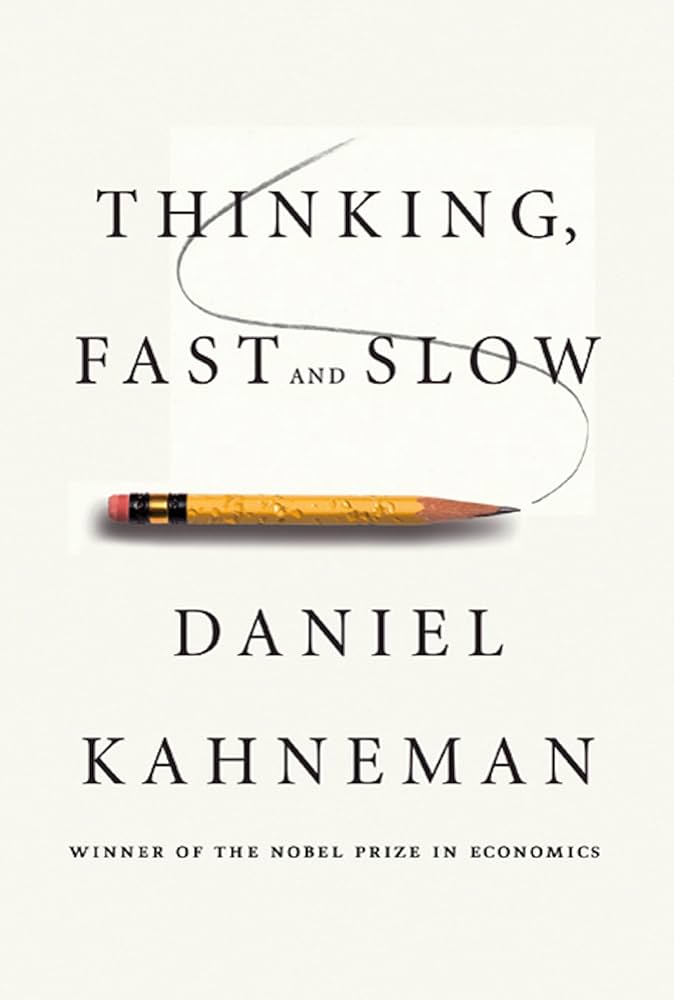
Clear, well-regarded introductions and syntheses that repay careful reading: "Thinking, Fast and Slow" by Daniel Kahneman — foundational on dual-process thinking and judgment under uncertainty. "The Body Keeps the Score" by Bessel van der Kolk — influential on trauma, best read with awareness that some claims remain debated. "Atomic Habits" by James Clear — practical application of learning and habit principles (accessible rather than academic). "Attached" by Amir Levine and Rachel Heller — clear introduction to adult attachment patterns. "Why We Sleep" by Matthew Walker — strong case for the centrality of sleep (some details remain under active research). Introductory textbooks such as those by Myers, Gray, or Schacter et al. remain excellent structured overviews.
2. Evidence-Informed Everyday Practices
- Protect sleep. Consistent schedules and adequate duration support nearly every psychological function.
- Move regularly. Physical activity has reliable benefits for mood, attention, and stress regulation.
- Maintain a few close relationships. Social connection is among the strongest correlates of well-being.
- Practice retrieval and spaced review when learning anything important.
- When strong emotion arises, pause long enough to notice the appraisal and consider alternative interpretations.
- Design the environment to make desired behaviours easier and undesired ones harder.
3. When Professional Help Is Appropriate
Consider seeking a qualified professional if you experience: persistent low mood or loss of interest lasting more than two weeks and interfering with life; anxiety that is intense, frequent, or avoidant to a degree that restricts activities; difficulty functioning at work, school, or in relationships; thoughts of harming yourself or others; or substance use that is causing harm or dependence. Primary care providers, licensed psychologists, licensed clinical social workers, and psychiatrists are appropriate resources. In crisis, local emergency services or dedicated crisis lines should be used.
4. Evaluating Psychological Claims
- Ask whether the claim is based on systematic evidence or mainly on anecdote.
- Look for effect sizes and practical significance, not only statistical significance.
- Notice whether the source acknowledges limitations and alternative explanations.
- Be especially cautious with claims that promise rapid, universal transformation.
5. Final Reminder
The most powerful strategy remains the pattern outlined in Chapters 1–10: understand the basic processes of brain, perception, learning, memory, motivation, emotion, personality, and social influence, then apply that understanding with realism and consistency. Tools and books are secondary. The primary work is the repeated, ordinary practice of noticing psychological processes more accurately and responding to them with greater skill. When chosen carefully and used consistently, the resources above can support that practice. They cannot replace it.
Conclusion: Understanding the Mind as a Practical Skill
Psychology offers a set of reliable tools for understanding why people think, feel, and act as they do. Across the preceding chapters we have examined the biological foundations of mind and behaviour, the constructive nature of perception and attention, the processes of learning and memory, the dynamics of thinking and decision-making, the sources of motivation and emotion, the patterns of personality, the powerful influence of social context, and the practical domains of stress, mental health, and well-being.
The central message is straightforward. The mind is not a black box, nor is it a simple machine. It is a set of interrelated processes shaped by biology, experience, and culture. These processes can be studied systematically, and the resulting knowledge can be used to reduce unnecessary suffering, improve learning and relationships, and support more realistic self-understanding.
These insights are compatible with a wide range of personal values and life circumstances. They do not require adopting any particular worldview. They simply make it less likely that we will be surprised by ordinary features of human psychology or misled by oversimplified claims.
Consistency across months and years matters more than dramatic short-term change. Small improvements in how one understands attention, habit formation, emotional reactions, or social influence compound. The goal is not to achieve perfect self-control or permanent happiness. It is to become someone who notices psychological processes more accurately and responds to them with greater skill.
Individual starting points differ. Temperament, history, culture, and current circumstances all shape how these ideas will be useful. The material in this guide is educational. It is not a substitute for professional assessment, therapy, or medical care when those are needed.
The most useful step most people can take is to begin treating psychological processes as understandable rather than mysterious — the same way one might gradually understand nutrition or logical argument. Asking better questions about why a reaction occurred, what maintains a habit, or how a social situation is influencing judgment is the everyday practice that turns psychological knowledge into a living skill.
Understanding the mind is a tool, not a set of commandments. Used well, it supports both clearer self-knowledge and a more compassionate, realistic view of other people. That combination — informed, flexible, and sustainable — is the durable foundation for navigating mental life across a lifetime.
Further Reading
Thinking, Fast and Slow
Daniel Kahneman
The landmark book on how we think — covering dual-process theory, cognitive biases, and the systematic errors that shape our judgments and decisions. Essential reading for anyone who wants to understand the mind.
View on AmazonExplore other subjects
Foundations
Social Sciences
Humanities & Arts