Earth Sciences

The Living Earth

Geology for Curious Minds

Understanding the dynamic planet beneath our feet — Expanded Edition

You're standing on a planet that is alive beneath your feet. Geology is the study of the Earth — its rocks, its history, and the powerful forces that constantly reshape it. You don't need equations or a science degree to explore these forces. You only need curiosity and the willingness to look at the ground, the mountains, and the landscape around you with fresh eyes.

The Earth is not a static ball of rock. It is a dynamic, restless world where continents drift, mountains rise and fall, volcanoes erupt, and earthquakes shake the ground. The rocks beneath us contain the story of billions of years of change — from the formation of the planet itself to the slow sculpting of landscapes by wind, water, and ice. This book is your guided tour through that story — one idea at a time, told in plain language.

We'll begin by asking what a rock actually is and how the three main types form and transform into one another. Then we'll explore plate tectonics, the idea that the Earth's outer shell is broken into moving pieces that explain earthquakes, volcanoes, and mountain ranges. From there we look at volcanoes and earthquakes in more detail, then at how mountains are built and worn down, how fossils record deep time, and how the Earth supplies the resources we depend on. Finally we consider the practical side: hazards, resources, and how understanding the planet helps us live more wisely on it.

Each chapter stands on its own, so you can read them in any order. Taken together they form one continuous story: the Earth is not a finished object but a work in progress, constantly changing on timescales from seconds to billions of years. By the end of this book you will see the landscape differently. You'll notice the hidden geology in a roadside cliff, in the curve of a river, in the shape of a mountain range, and in the ancient story written in the stones beneath your feet. That shift in seeing is the real gift of geology. It doesn't just answer questions — it changes the questions you think to ask. So let's begin.

Chapter 1

What Is a Rock? – The Building Blocks of the Earth

A rock is simply a solid made of one or more minerals. Minerals are the natural building blocks — each one has its own crystal structure and chemical makeup, like quartz, feldspar, or mica. When these minerals grow together or get cemented into a solid mass, they become a rock. Understanding rocks is the first step to reading the Earth's story, because every rock carries clues about how and where it formed.

Igneous Rocks – From Fire

Igneous rocks form when molten rock cools and hardens. The molten material is called magma when it is still underground and lava when it reaches the surface. If magma cools slowly deep underground, large crystals have time to grow, creating coarse-grained rocks like granite. Granite is common in the cores of mountain ranges and in many kitchen countertops. If the molten rock cools quickly on the surface after a volcanic eruption, the crystals stay tiny or don't form at all, producing fine-grained rocks like basalt or glassy rocks like obsidian. Basalt makes up much of the ocean floor and many volcanic islands. The size of the crystals is one of the easiest clues to how quickly the rock cooled.

Sedimentary Rocks – From Layers

Sedimentary rocks form from material that has been broken down, carried away, and then deposited in layers. Sand, mud, or the remains of living things settle at the bottom of rivers, lakes, or oceans. Over time, the weight of newer layers squeezes out the water and cements the particles together. Sandstone forms from sand, shale from mud, and limestone often from the shells and skeletons of marine creatures. These rocks frequently contain fossils and preserve records of ancient environments. A sandstone may record an ancient beach or river channel; a limestone may record a warm, shallow sea. Because they form in layers, sedimentary rocks are especially useful for reading the order of events in Earth's history.

Metamorphic Rocks – From Change

Metamorphic rocks are created when existing rocks are changed by intense heat and pressure without melting. The original minerals recrystallize into new ones, often producing banded or layered textures. Marble forms from limestone and is prized for sculpture and buildings. Slate forms from shale and splits easily into thin sheets, which is why it was traditionally used for roofing. Gneiss forms from granite or similar rocks and shows distinctive light and dark banding. These rocks reveal where the Earth's crust has been squeezed, folded, or buried deep underground. The new textures are the visible signature of those conditions.

Why Rocks Matter

By the end of this chapter you can see why the same minerals can appear in very different rocks, and why the texture and structure of a rock tell us its history. Rocks are the Earth's memory. Each one records the conditions under which it formed. Learning to notice the differences between them is the beginning of reading the planet's past. Once you start looking, the rocks around you — in a cliff, a riverbed, a building stone, or a mountain — stop being anonymous and start telling stories.

  • A rock is a solid made of one or more minerals.
  • Igneous rocks form from cooled molten rock; sedimentary from deposited layers; metamorphic from heat and pressure.
  • Crystal size, layering, and texture reveal how and where a rock formed.
  • Rocks are the Earth's memory of past conditions.
Chapter 2

The Rock Cycle – How Rocks Change Over Time

The rock cycle is the continuous process that turns one type of rock into another. It shows that rocks are not permanent — they are constantly being created, destroyed, and transformed by the Earth's internal heat and surface processes. This cycle has been operating for billions of years and is one of the central ideas in geology.

How the Cycle Works

Igneous rocks begin as molten magma or lava. When this molten rock cools and solidifies, it becomes igneous rock. These rocks can then be broken down by weather and carried away as sediments. When layers of sediment accumulate and become compacted and cemented, they turn into sedimentary rocks. Those rocks can later be buried deep underground, where heat and pressure transform them into metamorphic rocks. If metamorphic rocks are heated further, they can melt and become magma again, completing the cycle.

Any rock type can, in principle, be transformed into any other. An igneous granite can be weathered into sand that becomes sandstone; that sandstone can be buried and changed into a metamorphic rock; that metamorphic rock can melt and form new igneous rock. The cycle has no fixed starting point and no final end. What we see at the surface is only a temporary stage in a much longer process.

What Drives the Cycle

The rock cycle is driven by two main forces. The Earth's internal heat powers melting and the changes that create metamorphic rocks. Surface processes — weathering, erosion, and deposition — break rocks down and move the pieces around. Plate tectonics also plays a major role by burying rocks, exposing them at the surface, and creating the conditions for melting.

There is no true beginning or end to the rock cycle — it is a continuous loop. The materials that make up the Earth's crust are constantly being recycled through different rock types. Every rock you see today is part of this ancient, ongoing process. The same atoms may have been part of a mountain, a beach, a volcano, and a metamorphic rock over the course of Earth's history. The cycle connects the deep interior of the planet with the surface we walk on and shows that the ground is not fixed but slowly turning over.

  • Rocks are not permanent; they change from one type to another over time.
  • The cycle is driven by internal heat and surface processes.
  • Igneous, sedimentary, and metamorphic rocks can all transform into one another.
  • The materials of the Earth's crust are continually recycled.

Chapter 3

Plate Tectonics – The Moving Puzzle of the Earth's Crust

Plate tectonics is the idea that the Earth's outer shell is broken into large, rigid pieces called tectonic plates that slowly drift across the planet's surface. This single concept explains why continents fit together like puzzle pieces, why earthquakes and volcanoes occur where they do, and why mountains rise in certain places. It is the central idea of modern geology.

The Evidence for Moving Continents

The story begins with the observation that the continents look like they could fit together. South America and Africa, for example, have matching coastlines. In the early 1900s Alfred Wegener proposed that the continents were once joined in a single supercontinent called Pangaea and had since drifted apart. At the time most scientists rejected the idea because no one could explain how continents could move through solid rock.

The key evidence came decades later from the ocean floor. Scientists discovered that new crust is constantly being created at mid-ocean ridges where magma rises from below and pushes the seafloor apart. As the new crust forms, it records the direction of Earth's magnetic field at that moment. These magnetic stripes on either side of the ridges proved that the seafloor was spreading outward. The Earth's crust is not fixed. It is broken into about a dozen major plates and many smaller ones that float on the hot, semi-fluid rock of the mantle beneath them. Heat from the interior keeps the system in motion.

What Happens at Plate Boundaries

Where plates move apart, new crust forms. Where they collide, one plate can be forced under the other in a process called subduction, or the edges can crumple upward to form mountains. Where plates slide past each other, they create long faults. Most earthquakes and volcanoes occur along these boundaries. The "Ring of Fire" around the Pacific Ocean follows the edges of several plates. The Himalayas are still rising today as the Indian plate continues to push into the Eurasian plate. The Atlantic Ocean is slowly widening as new crust forms along the Mid-Atlantic Ridge.

By the end of this chapter you can see why the Earth's surface is constantly changing and why the continents are still moving today. The Earth's outer shell is broken into moving plates driven by heat from the planet's interior. Plate tectonics turned geology from a descriptive science into a truly dynamic one. The map of the world is not fixed; it is a snapshot of a slow, ongoing rearrangement that has been happening for hundreds of millions of years and will continue long into the future.

  • The Earth's outer shell is broken into moving tectonic plates.
  • New crust forms where plates pull apart; mountains and volcanoes form where they collide.
  • Most earthquakes and volcanoes occur along plate boundaries.
  • Continents have moved and continue to move over geologic time.

Chapter 4

Volcanoes – Fire from the Deep

Volcanoes are the Earth's way of releasing internal heat and pressure. They form where molten rock rises from deep underground and breaks through the surface. These dramatic events remind us that the planet is still very much alive beneath our feet.

Where Magma Comes From

Magma forms in several ways. At mid-ocean ridges the crust pulls apart and hot mantle rock rises to fill the gap, melting as the pressure drops. At places where one plate slides beneath another, water-rich sediments are carried down and lower the melting point of the overlying rock, producing magma that rises to form volcanic arcs. Hotspots, like the one beneath Hawaii, occur where a plume of especially hot rock rises from deep within the mantle. When magma reaches the surface it erupts as lava. The location of volcanoes is therefore not random; it follows the pattern of plate boundaries and a few special hotspots.

Types of Eruptions and Their Effects

The type of eruption depends on the magma's thickness and gas content. Runny, low-silica magma flows easily and creates broad, gently sloping shield volcanoes like those in Hawaii. Thick, high-silica magma is sticky and traps gas, leading to explosive eruptions that can blast ash and rock high into the atmosphere and form steep-sided stratovolcanoes like Mount Fuji or Mount St. Helens. Explosive eruptions can be extremely dangerous, producing fast-moving avalanches of hot gas and rock as well as widespread ash falls.

Volcanic eruptions can be both destructive and constructive. Lava flows and ash can bury towns and farmland, and large eruptions can affect climate for a time by injecting particles into the upper atmosphere. Yet over time volcanic material weathers into rich soil, and the new land created by eruptions can expand islands and coastlines. Some of the most fertile agricultural regions on Earth are built on volcanic soils. Volcanoes destroy and create in the same ongoing process.

  • Volcanoes release molten rock that has risen from below.
  • They occur mainly along plate boundaries and at hotspots.
  • The style of eruption depends on how runny or sticky the magma is.
  • Volcanoes both destroy and create landscapes over time.

Chapter 5

Earthquakes – When the Ground Shakes

Earthquakes are the sudden release of energy stored in the Earth's crust. They happen when rocks along a fault — a fracture where two blocks of rock have moved past each other — suddenly slip. This sudden movement sends shock waves rippling through the ground, sometimes with devastating results.

Why and Where Earthquakes Happen

Most earthquakes occur along plate boundaries. At transform boundaries, plates slide past each other and get stuck, building up stress until the rocks break and slip. At subduction zones, one plate is forced under another, creating deep earthquakes. At divergent boundaries, where plates pull apart, the quakes tend to be shallower and smaller. The famous San Andreas Fault in California is a transform boundary where the Pacific and North American plates grind past each other.

The strength of an earthquake is measured by how much energy it releases. The modern moment magnitude scale replaced the older Richter scale. Each whole number increase represents roughly thirty times more energy released. A magnitude 7 earthquake releases nearly a thousand times more energy than a magnitude 5. Most of that energy travels as seismic waves that move through the Earth and along its surface.

What Earthquakes Can Do

Earthquakes can cause damage in several ways. The shaking itself can collapse buildings, especially older ones not built to modern standards. In some areas the ground can liquefy during strong shaking, turning solid soil into a liquid-like state that can swallow cars and foundations. Underwater earthquakes can trigger tsunamis — massive waves that can travel across entire oceans and devastate coastlines far from the original quake.

Understanding where and why earthquakes happen helps communities prepare. Stronger buildings, better land-use planning, and early warning systems all reduce harm even though we cannot prevent the quakes themselves. The difference between a disaster and a manageable emergency often lies in preparation guided by geological knowledge.

  • Earthquakes release energy when rocks along a fault suddenly slip.
  • Most occur along the boundaries of tectonic plates.
  • Shaking, ground failure, and tsunamis are the main sources of damage.
  • Preparation and building standards reduce the human cost.

Chapter 6

Mountains – How the Earth Builds Peaks

Mountains are the Earth's way of building dramatic vertical relief. They form through several different processes, but most owe their existence to the movement of tectonic plates. These towering landscapes are not permanent features — they are constantly being built up and worn down over millions of years.

How Mountains Form

The tallest and most dramatic mountain ranges form where two continental plates collide. Because continental crust is too light and thick to be easily forced down into the mantle, the rocks are forced upward and crumpled into massive fold mountains. The Himalayas are the classic example — they are still rising today as the Indian plate continues to push into the Eurasian plate. The Alps formed in a similar way when the African plate collided with Europe.

Mountains can also form at subduction zones where an oceanic plate slides beneath a continental plate. The descending plate releases water that causes the overlying mantle to melt, and the rising magma builds volcanic arcs. The Andes in South America and the Cascade Range in North America are examples of these volcanic mountain chains. In other places the crust is stretched, and large blocks of rock drop down along faults, leaving the surrounding blocks standing higher as fault-block mountains. The Sierra Nevada and parts of the Basin and Range province in the western United States formed this way.

Mountains Are Temporary

As soon as mountains begin to rise, erosion starts wearing them down. Rivers cut deep valleys, glaciers carve U-shaped troughs, and landslides reshape slopes. Over time even the highest peaks are reduced to rolling hills. The Appalachians were once as tall as the Himalayas but have been eroding for hundreds of millions of years. The landscape we see today is the result of an ongoing contest between uplift and wearing down. Young ranges are high and jagged; old ranges are lower and more rounded. Mountains are temporary features on a restless planet.

  • Most large mountain ranges form through plate collisions or related volcanic activity.
  • Different processes produce fold mountains, volcanic arcs, and fault-block ranges.
  • Erosion begins as soon as mountains rise and eventually wears them down.
  • Young ranges are high and rugged; old ranges are lower and more rounded.

Chapter 7

Erosion and Weathering – The Slow Sculpting of the Land

Erosion and weathering are the quiet forces that wear down mountains and reshape landscapes over time. While volcanoes and earthquakes build the Earth dramatically and quickly, weathering and erosion work slowly and steadily, sculpting the surface into the hills, valleys, and coastlines we see today.

Weathering Breaks Rocks Down

Weathering is the breakdown of rocks at or near the Earth's surface. Physical weathering happens when rocks are cracked by freezing water, plant roots, or repeated temperature changes. Water seeps into cracks, freezes, expands, and pries the rock apart. Chemical weathering occurs when minerals react with water, oxygen, or acids — for example when limestone dissolves in slightly acidic rainwater, creating caves and sinkholes. Biological weathering is caused by living things: roots pry rocks apart, and lichens and microbes slowly break down surfaces. Over long periods even hard rocks are reduced to smaller pieces and eventually to soil.

Erosion Moves the Pieces

Erosion is the movement of weathered material by water, wind, ice, or gravity. Rivers are among the most powerful agents — they cut valleys, transport sediment downstream, and eventually deposit it in deltas or on the seafloor. Glaciers grind and scrape the land as they move, carving U-shaped valleys and leaving behind ridges of debris. Wind can pick up and carry fine particles across dry regions, creating sand dunes and polishing rocks into unusual shapes. Gravity causes landslides and rockfalls that move material downslope.

These processes work together to level the land. Mountains are slowly worn down, valleys are deepened, and sediment is carried to lower elevations or the sea. Over millions of years even the highest peaks can be reduced to gentle hills. The same forces that destroy also create — river deltas, floodplains, and beaches are all built from material removed from higher ground. The gentle curves of a river valley or the rounded shape of an old mountain are the visible result of this endless, patient work.

  • Weathering breaks rocks apart at the surface through physical, chemical, and biological processes.
  • Erosion carries the pieces away by water, wind, ice, or gravity.
  • These processes slowly wear down mountains and reshape the landscape.
  • Destruction in one place builds new landforms in another.

Chapter 8

Fossils and Deep Time – Reading the Earth's History

Fossils are the preserved remains or traces of ancient life, and they are our main window into the Earth's deep past. They allow us to read the planet's history written in stone — from the first simple organisms billions of years ago to the complex ecosystems that exist today. Understanding fossils also reveals just how vast geologic time really is.

How Fossils Form and What They Show

Most fossils form when an organism is quickly buried by sediment after death. The soft parts usually decay, but hard parts like shells, bones, or teeth can be preserved. Over time, minerals in groundwater can replace the original material or fill in the spaces, turning the remains into stone. Some fossils are not the organism itself but traces it left behind — footprints, burrows, or even fossilized dung.

Fossils are not randomly scattered through the rock record. They appear in a specific order that reflects the history of life. The oldest rocks contain only simple fossils like bacteria and algae. Later rocks show the appearance of more complex organisms — first shellfish and corals, then fish, amphibians, reptiles, and finally mammals and birds. This ordered succession helps geologists determine the relative age of rock layers. The fossil record also reveals mass extinctions — times when large numbers of species disappeared relatively suddenly. The most famous is the extinction at the end of the Cretaceous period that wiped out the non-avian dinosaurs. These events punctuate the long, slow story of life and remind us that the planet has faced major crises in the past.

The Scale of Deep Time

The Earth's history is measured in billions of years. That timescale is almost impossible to feel in ordinary human terms, yet it is written clearly in the rocks and fossils. By the end of this chapter you can see why geology forces us to think in spans of time far longer than human history or even the history of our species. Fossils and rock layers together let us read a story that stretches back over four billion years. The ground beneath your feet is not only solid; it is a library of that deep past.

  • Fossils preserve remains or traces of ancient life.
  • They appear in a consistent order that reflects the history of life.
  • Mass extinctions mark major turning points in that history.
  • Geologic time spans billions of years and is recorded in rocks.

Chapter 9

Natural Resources – What the Earth Provides

The Earth supplies the raw materials that make human civilization possible. From the metals in our phones to the energy that powers our homes, nearly everything we use comes ultimately from the ground beneath us. These natural resources are not evenly distributed — they form only under specific geological conditions, which is why certain regions have become wealthy from what lies beneath their soil.

Metals, Energy and Other Materials

Metals are among the most valuable resources. They form when hot, mineral-rich fluids circulate through cracks in the crust and deposit concentrated ores. Copper, iron, gold, and aluminum are extracted from these deposits. Some metals are relatively common; others, such as certain rare elements used in electronics, are scarce and found in only a few places.

Energy resources come in several forms. Coal, oil, and natural gas are fossil fuels formed from the remains of ancient plants and microscopic marine life that were buried and transformed by heat and pressure over millions of years. These resources are finite on human timescales. Geothermal energy taps the Earth's internal heat directly and can provide a more continuous source of power in volcanically active regions. Building materials such as limestone, granite, and sand; industrial minerals such as salt and phosphate; and groundwater stored in porous rock layers are also essential. Without them modern life would be impossible.

Why Distribution Matters

Because valuable resources form only under particular geological conditions, their locations have shaped trade, wealth, and conflict for centuries. Understanding how and where they form helps societies find and use them more wisely, and also highlights the environmental costs of extraction — polluted water, disturbed land, and the climate effects of burning fossil fuels. By the end of this chapter you can see that geology has a direct impact on economies and daily life: the materials we depend on are products of the same Earth processes that build mountains and recycle rocks. The uneven map of resources is one of the practical consequences of a dynamic planet.

  • Metals, fuels, water, and building materials all come from geological processes.
  • Resources form only under specific conditions and are unevenly distributed.
  • Their locations have shaped human history and continue to matter today.
  • Extraction brings benefits and environmental costs that must be managed.

Chapter 10

Geology and Human Life – Hazards, Resources, and the Future

Geology is not just about ancient rocks and distant history — it is deeply connected to human life today. Our understanding of the Earth helps us manage natural hazards, use resources wisely, and plan for a sustainable future on a dynamic planet.

Living with Hazards

Natural hazards are among the most immediate ways geology affects us. Earthquakes, volcanic eruptions, landslides, tsunamis, and floods can cause enormous loss of life and property. By mapping fault lines, monitoring volcanoes, and studying past events, geologists help communities build safer buildings, create early warning systems, and develop better land-use plans. Knowing where and why these events happen allows us to reduce their impact even if we cannot prevent them. The difference between a disaster and a manageable emergency often lies in preparation guided by geological knowledge.

Resources and the Future

Resources are another major connection. The metals, fuels, water, and building materials we rely on all come from geological processes. As populations grow and technology advances, demand for these resources increases. Geology helps us find new deposits, assess how much remains, and develop more sustainable ways to extract and use them. At the same time it warns us about the environmental costs.

Looking to the future, geology will play a central role in addressing global challenges. Understanding past climate changes recorded in ice cores, sediment layers, and fossils helps us anticipate how the planet might respond to current human-caused warming. Geologists are also involved in finding ways to store carbon underground, managing nuclear waste safely, and identifying sites for renewable energy projects such as geothermal plants. The better we understand the planet's processes — both the hazards they create and the resources they provide — the better equipped we are to thrive as part of this living system.

  • Geology helps us prepare for earthquakes, volcanoes, and other natural hazards.
  • It also guides the search for and responsible use of resources.
  • Understanding Earth processes supports better decisions about climate, energy, and land use.
  • A dynamic planet requires ongoing knowledge and careful management.

We have journeyed from the tiny crystals inside a single rock to the vast forces that shape entire continents and the deep history written in the stones beneath our feet. Along the way we have seen that the Earth is not a finished, static world but a dynamic, living system — constantly recycling its materials, moving its plates, building mountains, wearing them down, and recording its own history in layers of rock and fossils.

The power of geology lies in its ability to connect the very small with the very large. The same processes that form a single mineral crystal also build mighty mountain ranges and drive the forces that cause earthquakes and volcanoes. The rock cycle, plate tectonics, erosion, and the slow accumulation of fossils together tell one continuous story of a restless planet that has given us the air we breathe, the water we drink, the soil we grow food in, and the resources that built our civilizations.

Yet the Earth's story is far from over. Volcanoes will continue to erupt, earthquakes will shake the ground, and the slow sculpting of landscapes by wind and water will never stop. At the same time, human activity is now influencing the planet on a global scale. Understanding geology gives us the tools to live more wisely — to prepare for natural hazards, manage resources responsibly, and make better decisions about how we interact with this living Earth.

If this book has done its job, you will never look at the landscape the same way again. The next time you see a mountain peak, a river valley, a rocky cliff, or even a handful of sand, you'll have a deeper appreciation for the hidden forces and vast stretches of time that shaped them. The Earth is still writing its story. The more we understand it, the better we can live as responsible inhabitants of this beautiful, powerful, and ever-changing planet.

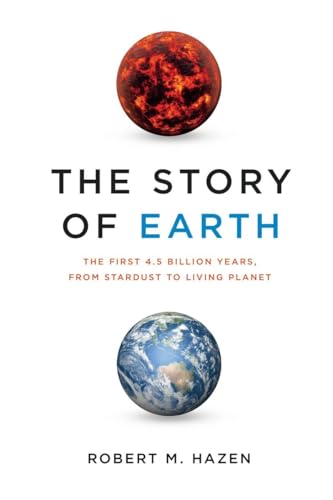
The Story of Earth by Robert M. Hazen — book cover

Further Reading

The Story of Earth

Robert M. Hazen

A sweeping narrative of our planet's 4.5-billion-year history — from molten rock to the rise of life — told through the lens of mineralogy and deep time.

View on Amazon
Paradessa

© 2026 Paradessa